How Scott Industrial Systems Retrofitted a 114" Digger Shield TBM With a Modern CAN-Based Hydraulic Control System
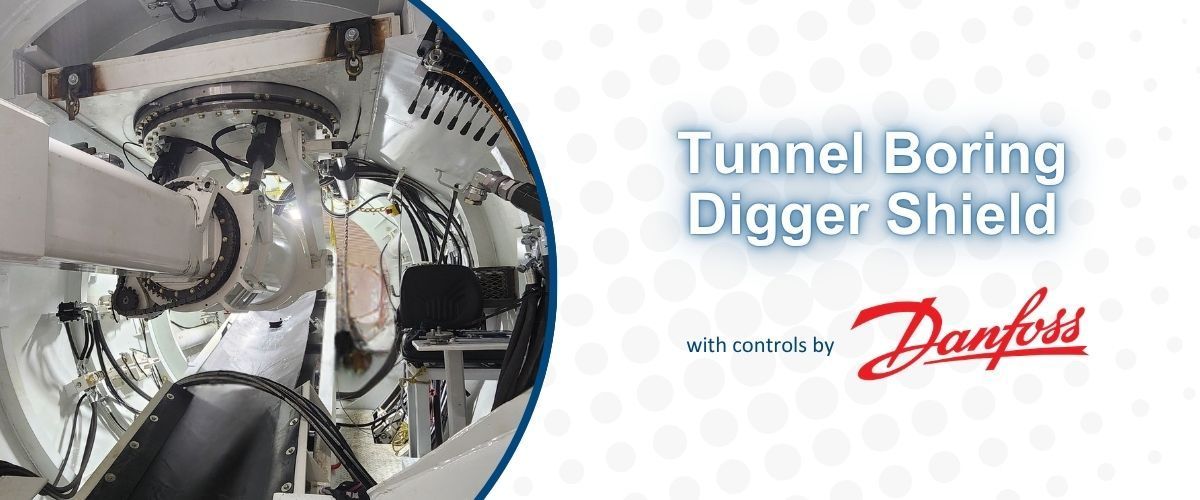
Scott Industrial Systems, a fluid power integrator based in Dayton, Ohio,
partnered with a tunnel-boring machine OEM to retrofit a legacy 114-inch-digger shield TBM with a modern CAN-based hydraulic control system. Built around Danfoss PVG100 flow-sharing valves, PVED CAN actuators, an MC38-010 PLUS+1 controller, MPCAN networking, and an IK4 radio remote, the upgraded system controls 20+ hydraulic actuators simultaneously across digger arm positioning, axial drum cutting, articulated steering, thrust cylinders, and conveyor operation - for a 1,240-foot tunnel alignment in mixed soft soil and hard rock conditions.
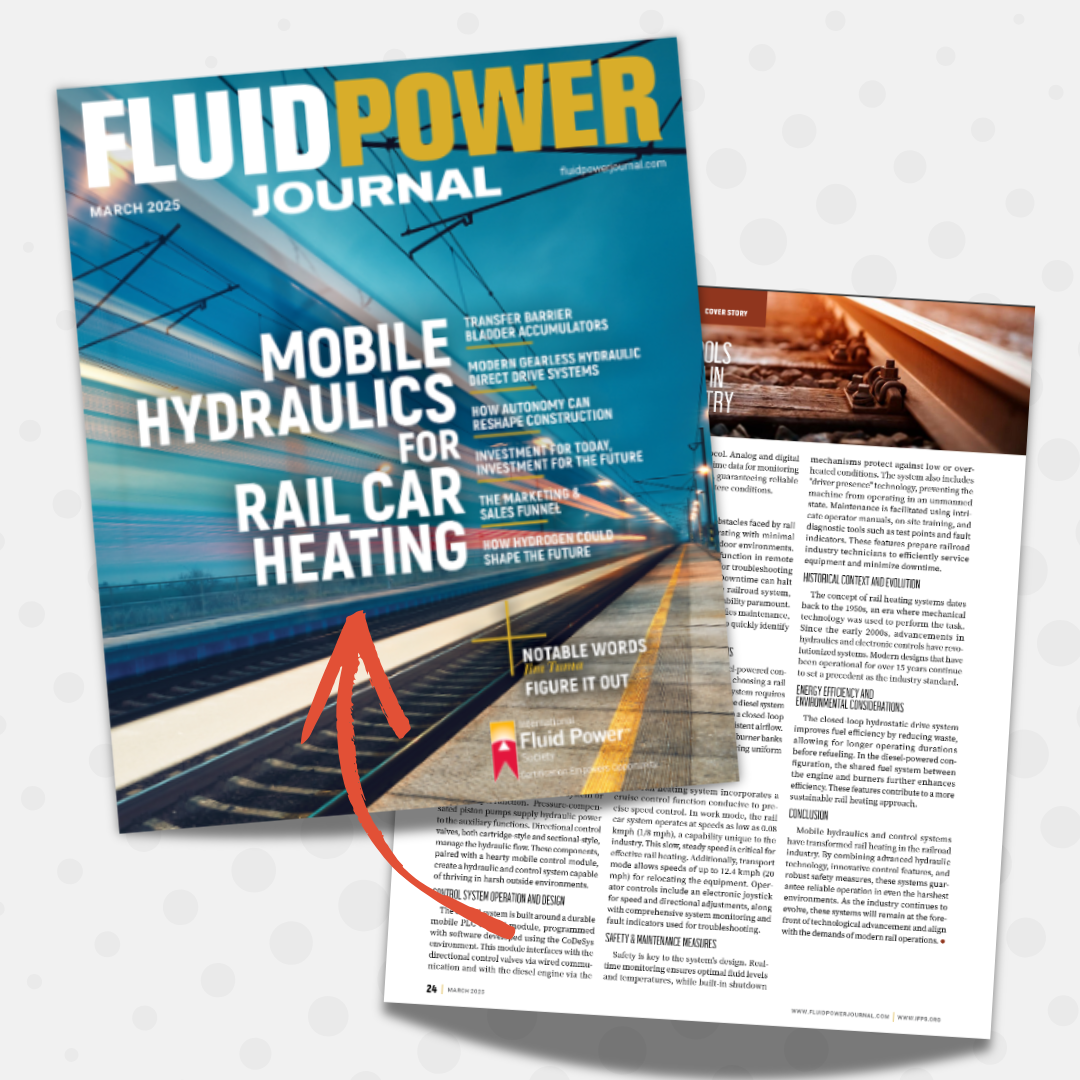
👉 READ ABOUT THIS PROJECT FEATURED IN THE FLUID POWER JOURNAL
What is a digger shield tunnel boring machine?
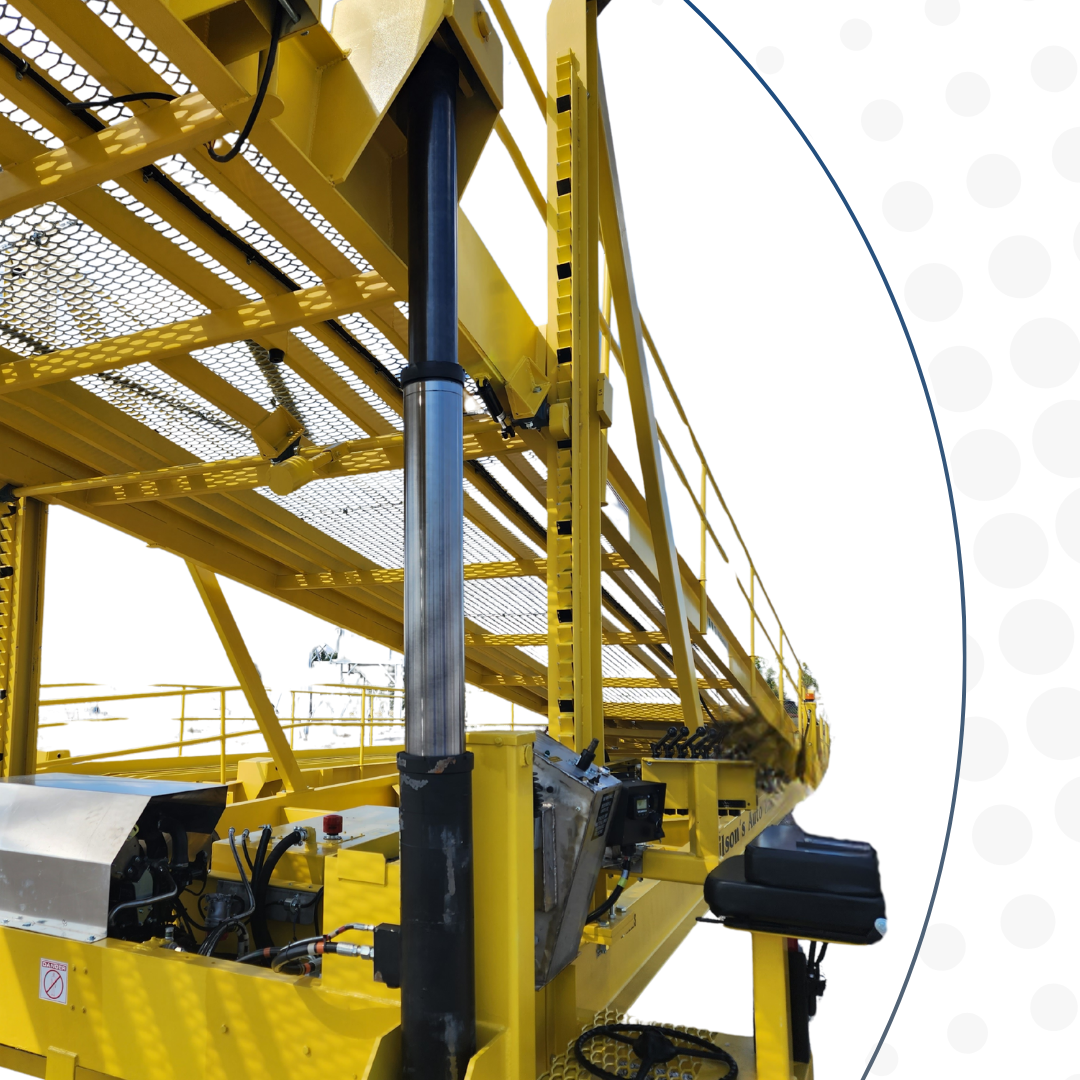
A digger shield tunnel boring machine is a type of tunnel boring machine (TBM) that uses an articulated digger arm and a rotating axial drum cutter, housed inside a protective steel shield, to excavate tunnels through both soft soils and hard rock. Unlike full-face cutterhead TBMs, a digger shield provides the operator with selective control over the cutting face, making it well-suited to mixed-ground conditions and shorter tunnel alignments. The shield itself protects workers and equipment at the cutting face while ground support and tunnel lining are installed behind the machine.
Why retrofit a legacy TBM frame instead of buying a new one?
Retrofitting a legacy TBM frame is typically faster, significantly less expensive, and lower-risk than commissioning a new tunnel boring machine, because the structural frame of a well-built TBM can outlast its hydraulic and electronic systems by decades. A new TBM is a multi-million-dollar capital purchase with long lead times, often a year or more. At the same time, a controls-and-hydraulics retrofit can be engineered, integrated, and deployed in a fraction of that time. The frame, shield, drum, and major mechanical assemblies on a sound legacy machine are usually still fit for service; what becomes obsolete is the hydraulic plumbing, manual valve banks, and pre-CAN electrical wiring. Replacing those subsystems with modern flow-sharing valves and CAN-based controls delivers most of the performance benefit of a new machine, at a meaningful fraction of the cost and timeline.
What hydraulic challenges did the retrofit solve?
The retrofit solved six specific challenges the customer faced on the 114-inch digger shield TBM:
- Controlling 20+ hydraulic actuators simultaneously across digger arm positioning, axial drum cutting, articulated steering, thrust cylinders, and conveyor operation
- Retrofitting a legacy machine frame without redesigning the underlying mechanical structure
- Reducing system complexity and the volume of wiring required to operate the machine
- Improving diagnostics and serviceability so faults can be identified and resolved quickly
- Simplifying operation compared to manual valve systems that previously required multiple operators and manual coordination
- Ensuring safe control at the cutting face of the machine, where the operator works in close proximity to active hydraulic and cutting equipment
What components make up the new control system?
Scott Industrial Systems built the control system around five core Danfoss components, each chosen for a specific reason:
- Danfoss PVG100 flow-sharing valve system is the main hydraulic control valve platform, selected because flow sharing allows multiple actuators to operate simultaneously and smoothly even when total demand exceeds available pump flow.
- PVED CAN actuators, electronic valve actuators that communicate over CAN bus, are chosen to reduce point-to-point wiring dramatically and to enable real-time diagnostics from each valve section.
- MC38-010 PLUS+1 controller, the central programmable mobile controller, selected because the PLUS+1 platform is purpose-built for harsh mobile equipment environments and supports the CAN networking, safety logic, and graphical programming required by the application.
- MPCAN communication network, the CAN-based communication backbone that ties the controller, valves, sensors, and remote together into a single coordinated system.
- IK4 radio remote system is a wireless operator control unit that allows a single operator to run all excavator and machine functions from outside the immediate hazard zone of the cutting face.
How does the PVG100 flow-sharing valve simplify TBM hydraulics?
The Danfoss PVG100 flow-sharing valve simplifies TBM hydraulics by allowing multiple actuators to operate simultaneously without one function starving another, even when the operator commands more total flow than the pump can deliver. In a traditional valve bank, when total demand exceeds pump capacity, the lowest-pressure function wins, and the others slow or stall, which, on a TBM, means the digger arm, drum, steering, thrust, and conveyor all fight for flow. With flow sharing, the available flow is distributed proportionally among all active functions, so motion remains smooth and predictable across all actuators. The PVG100 platform also consolidates what would otherwise be multiple valve assemblies into a single modular stack, thereby reducing hose count, fitting count, leak points, and overall plumbing complexity.
What does CAN bus do for a tunnel boring machine?
CAN bus replaces dozens of dedicated wires running between sensors, valves, switches, and the controller with a single twin-pair communication network, dramatically reducing wiring complexity, installation time, and failure points on a tunnel boring machine. On a TBM with 20+ actuators, traditional analog wiring would require hundreds of individual conductors running the length of the machine; CAN reduces that to a single backbone with each device addressed digitally. CAN also enables real diagnostics - every valve, sensor, and actuator can report its status, current draw, fault codes, and operating data back to the controller and the operator interface, making troubleshooting a matter of reading a screen rather than tracing wires. Finally, CAN-based systems are scalable: adding a new sensor, actuator, or function in the future is largely a software and addressing exercise rather than a wiring rebuild, which makes the platform suitable for future machine updates and variants.
How does the IK4 radio remote improve safety at the cutting face?
The Danfoss IK4 radio remote improves safety at the cutting face by allowing a single operator to control all excavator and machine functions wirelessly from a position of their choosing, rather than working at a fixed control station next to active hydraulic and cutting equipment. At the cutting face of a TBM, the operator is surrounded by high-pressure hydraulics, a rotating drum cutter, articulated arm motion, and falling spoil. Minimizing the time spent in that hazard zone and giving the operator the freedom to move to the safest sightline materially reduces risk. The IK4 is built specifically for safety-critical mobile equipment, with redundant safety circuits, an emergency stop, and reliable radio communication designed for industrial environments. The result is a machine that one operator can run safely and efficiently from the best available vantage point, rather than a multi-person crew working in close proximity to live equipment.
Who manufactured the electrical control panel?
The electrical control panel for this tunnel-boring machine retrofit was manufactured by Sun Coast Controls Mfg., a UL 508A-listed industrial control panel builder, specializing in complex mobile and industrial integrations. Sun Coast Controls Mfg handled panel assembly while Scott Industrial Systems delivered the hydraulic design, controls integration, CAN programming, and safety systems - a division of work that allowed each partner to focus on their core engineering strength and shortened the overall build timeline.
The result is a modernized tunnel-boring machine control system that delivers precise control, improved reliability, and reduced operational complexity for a critical infrastructure project - a 1,240-foot tunnel alignment through mixed soft-soil and hard-rock conditions.
Who can retrofit a TBM hydraulic system in the United States?
Scott Industrial Systems retrofits tunnel-boring machines and other complex mobile hydraulic equipment with modern CAN-based control systems from our Dayton, Ohio, facility, serving OEMs and contractors across the United States. We are a full-line fluid power partner specializing in hydraulics, pneumatics, and electronic controls, with deep expertise in Danfoss PLUS+1 controllers, PVG flow-sharing valves, PVED CAN actuators, and IK4 radio remote systems. Our scope covers hydraulic design, controls engineering, CAN programming, safety systems, hydraulic tank and pump/motor assemblies, and full system integration - typically in partnership with a UL-listed panel builder such as Sun Coast Controls Mfg.
If you have a legacy tunnel boring machine, mining shield, mobile crane, or other heavy mobile platform that would benefit from a modern hydraulic and electronic control retrofit, we'd welcome the conversation.
Scott Industrial Systems Phone: 937.233.8146 Web: ScottIndustrialSystems.com
Locations: Dayton, Ohio - Indianapolis, Indiana - Wauconda, Illinois - Oberlin, Ohio - West Milton, Ohio, USA